The building
Palazzo Surian Bellotto and the Cannaregio Canal: the palace behind the stage
Who built the palace, who lived there and why the canal outside it was once the main way into Venice, drawn from encyclopaedia entries.
Reserve my evening ↗Quick answer
Palazzo Surian Bellotto is a 17th-century palace on the Cannaregio Canal, built for the Surian family and later owned by the Bellotto family. Wikipedia says it became the seat of the French embassy in the 18th century, that Jean-Jacques Rousseau lived there in 1743 and 1744 as the ambassador's secretary, and that its ground floor has housed a restaurant and jazz club since December 2016. The listing calls it the former French Embassy, which matches that account. The canal outside was the main way into Venice until a rail link reached the mainland in the 19th century.
The palace and the canal in brief
| What Wikipedia records | |
|---|---|
| Built | The 17th century, for the Surian family, a patrician family of Armenian origin |
| Later owners | The Bellotto family, of Brescian origin, from near the end of the 17th century |
| Embassy | The seat of the French embassy in the 18th century |
| Rousseau | Lived there in 1743 and 1744 as secretary to the ambassador |
| Today | A restaurant and jazz club on the ground floor since December 2016 |
| The canal | Called the main entrance route into Venice until a railway bridge was built in 1846 |
A palace for a patrician family
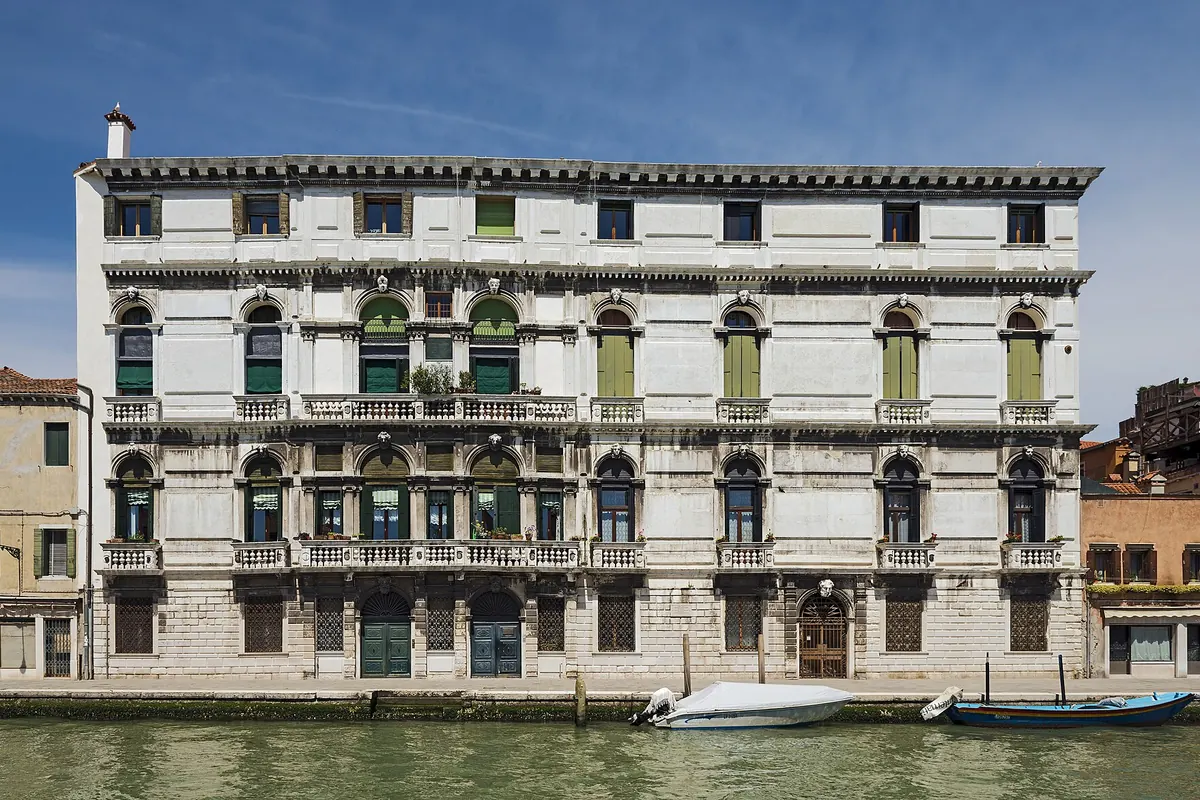
Wikipedia places the building's construction in the 17th century, for the Surian family, who it describes as patricians of Armenian origin. It credits the design to the architect Giuseppe Sardi, who also worked on the nearby Palazzo Savorgnan, and calls the style Baroque, with an asymmetrical facade whose most valuable openings sit to the left of the central axis. Towards the end of the 17th century the palace was sold to the Bellotto family, who came from Brescia. That is how the building took the double name it carries today. The photograph shows the long, many-windowed front that faces the water.
The French embassy
In the 18th century, Wikipedia says, the palace became the seat of the French embassy in Venice. That fits the booking page, which calls it the former French Embassy. The encyclopaedia does not date the start or end of the embassy's tenancy, so this guide does not either. The point to keep is that the embassy use is recorded in an independent source and is not only a line on a ticket page.
Rousseau in the palace
The most famous resident named in the entry is Jean-Jacques Rousseau, who lived in the palace in 1743 and 1744 and worked as secretary to the ambassador. Wikipedia's article on Rousseau describes the post as honourable but ill-paying, says his stipend was often paid late and records that he quit after eleven months, leaving with a deep distrust of government bureaucracy. It adds that the Venice period shaped his taste in music: he wrote in his Confessions that he came to love Italian music, especially opera, and that listening to barcaroles taught him what singing was. A jazz club in his old lodging has a pleasing symmetry, even if the styles differ.
Decline and revival
After the fall of the Republic of Venice, Wikipedia says, the palace decayed for a long period and its original interiors and decorations were irreparably lost. It calls the building one of the few historic buildings in Venice still inhabited by Venetians. The ground floor has housed the Laguna Libre restaurant and jazz club since December 2016. What visitors sit in, then, is a historic shell with a modern use, not a preserved period interior, and the booking page's description of an air-conditioned music hall fits that picture.
The canal outside
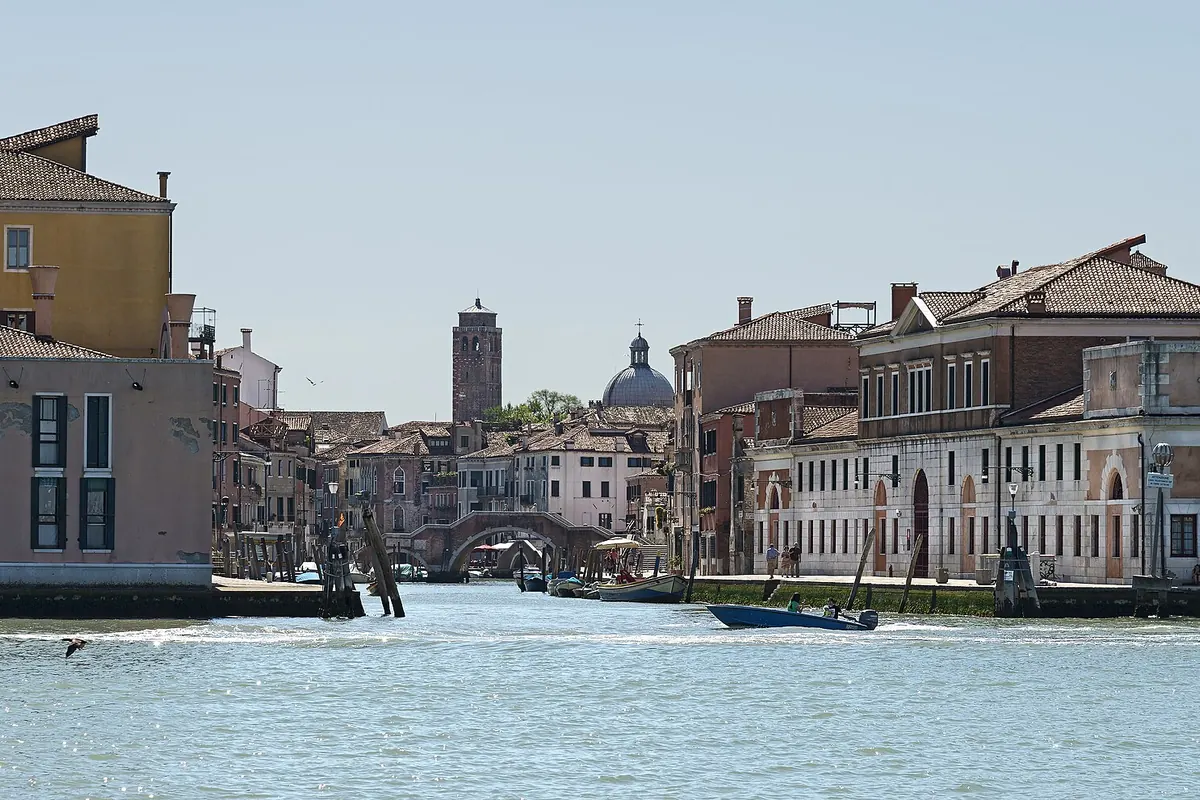
The Cannaregio Canal gives the district its name; Wikipedia says the word means royal canal and that the canal was the main route into the city until a rail link to the mainland was built. Its article on the canal gives the date of the railway bridge as 1846 and lists six palaces along it, among them Palazzo Labia and Palazzo Surian Bellotto. The photograph shows the canal's wide mouth as seen from the lagoon. Today the stretch near the club is a working residential waterfront, a far cry from the crowded Grand Canal a few minutes away.
What to take from it
The history gives an evening at the club a setting beyond the stage. Before the music starts, it is worth looking up at the facade from the fondamenta, if daylight allows, and thinking of the embassy staff and the young secretary who once used the same door. None of this is promised by the booking, which sells a concert and a meal, but it is the reason the room is more interesting than a typical club.
Frequently asked questions
Who built Palazzo Surian Bellotto?
Wikipedia dates it to the 17th century, for the Surian family, with a design attributed to Giuseppe Sardi.
Did Rousseau really live there?
Wikipedia says he lived in the palace in 1743 and 1744 while working as secretary to the French ambassador.
Is the club in the original interior?
Wikipedia says the palace's original interiors and decorations were irreparably lost, and the club occupies the ground floor.
Why is it called Cannaregio?
The district is named after the Cannaregio Canal, whose name Wikipedia translates as royal canal.
Sources